

Maximizing Energy Efficiency: The Benefits of Metal Roofs
Quick Answer
A metal roof improves energy efficiency mainly through reflectivity. Interlock's CRRC-rated Alunar® colors reflect more of the sun's radiant heat than dark asphalt, which can lower attic temperatures; actual savings depend on climate, color, insulation and ventilation. Because aluminum also sheds heat quickly after sunset, your home stays cooler longer than it would under heat-absorbing asphalt shingles.
Your roof is the largest sun-facing surface on your home — and the material you choose quietly decides how hard your air conditioner works every summer.
Most homes are topped with dark asphalt shingles that absorb solar radiation and re-radiate it downward into the attic, where temperatures can climb well past 150°F on a hot day. That trapped heat migrates into living spaces and forces your cooling system to run longer and harder. A more reflective roof absorbs less of it.
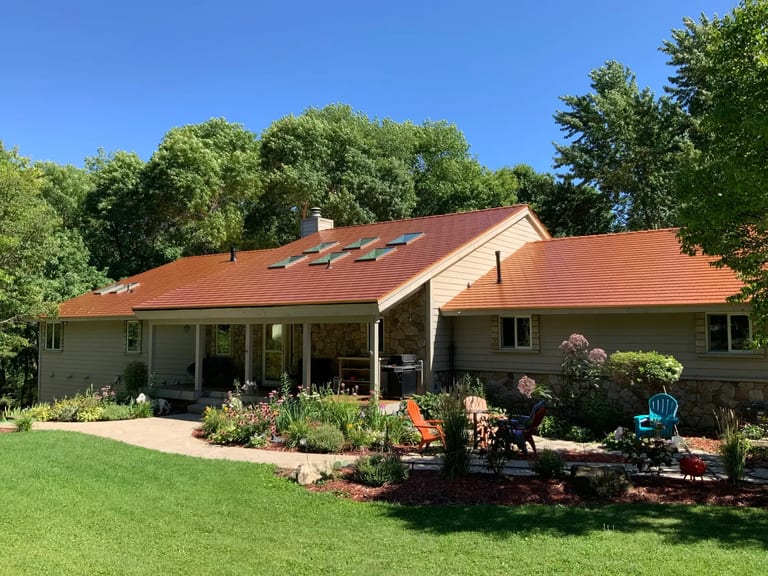
Interlock builds its lifetime aluminum roofing systems around a PVDF finish called Alunar®, whose rated colors reflect more of the sun's heat than dark asphalt, on a roof that shrugs off fire, wind, and impact — and lasts a lifetime. Those rated colors are listed by the Cool Roof Rating Council, the program that publishes reflectance values for roofing products across the industry.
How does a metal roof improve energy efficiency?
A metal roof improves energy efficiency mainly through reflectivity. Interlock's CRRC-rated Alunar® colors reflect more of the sun's radiant heat than dark asphalt, which can lower attic temperatures; actual savings depend on climate, color, insulation and ventilation. Because aluminum also sheds heat quickly after sunset, your home stays cooler longer than it would under heat-absorbing asphalt shingles.
What "Energy Efficiency" Actually Means for a Roof
Roofing energy efficiency comes down to two measurable properties: solar reflectance (how much sunlight the surface bounces away) and thermal emittance (how quickly it releases any heat it does absorb). A roof that scores high on both stays cooler in direct sun and cools down faster afterward — the definition of a "cool roof." The Cool Roof Rating Council (CRRC) publishes these values for rated products. Dark asphalt shingles sit near the bottom of this scale.
What Interlock's Alunar® Ratings Show
Every Interlock roof is finished in Alunar®, a high-performance PVDF (Kynar 500®-class) fluorocarbon coating applied to both sides of the panel. Its rated colors are listed by the Cool Roof Rating Council (CRRC): initial solar reflectance ranges from 0.25 to 0.44 (Aged Copper is highest), with thermal emittance of 0.83 to 0.86. Those two numbers are what matter. Reflectance keeps a share of the sun's radiant energy from ever entering the attic, and the high emittance means the roof releases the heat it does absorb almost immediately once the sun moves off it.
Why Aluminum Outperforms Heat-Absorbing Shingles
The advantage starts with the metal itself. Aluminum is naturally reflective and lightweight, and it doesn't store thermal energy the way a dense, dark asphalt mat does. Combined with the reflective Alunar® finish and the airspace created by Interlock's interlocking panel design, the system limits both radiant and conductive heat transfer into the structure. Asphalt, by contrast, is petroleum-based and dark by default; it bakes in the afternoon sun and bleeds that heat indoors for hours.
Energy Efficiency Meets Solar: A Roof Built to Power Your Home
An efficient roof and on-site solar are natural partners. Interlock systems are engineered to be solar-ready: the panels are strong enough to carry a PV array, and the roof is designed to last longer than the panels mounted on it — so you never face the expensive remove-and-reinstall cycle that happens when a solar array outlives a conventional roof beneath it.
Efficiency You Don't Have to Replace: Durability as Sustainability
The greenest, most efficient roof is the one you never have to tear off and send to a landfill. An Interlock roof is built to last 50 years or more — up to three times the lifespan of asphalt — which means a single install instead of two or three re-roofs over the same period. That longevity is backed by hard performance: a Class A fire rating, resistance to winds up to 120 mph, and UL 2218 Class 4 impact resistance. That same durability-as-sustainability logic is at the center of Interlock's broader case for investing in a sustainable future.
The Bottom-Line Payoff
Energy efficiency is rarely the only reason homeowners choose Interlock, but in a hot summer it's one of the first you notice: a reflective roof keeps more of the sun's heat out of the attic. Layered on top are decades of avoided maintenance, a transferable limited lifetime warranty, and the resale appeal of a permanent roof. This article was independently reviewed by Robert Scichili, a founding board member of the Cool Metal Roofing Coalition and a published authority on LEED and cool metal roofing.
Frequently Asked Questions
Can a metal roof save energy?
A reflective metal roof can reduce cooling-energy use compared with dark asphalt shingles, because it bounces away solar heat instead of absorbing it. Actual savings vary with climate, color, insulation, and attic ventilation.
What makes a roof a "cool roof"?
A cool roof has high solar reflectance (it reflects sunlight) and high thermal emittance (it releases absorbed heat quickly). The Cool Roof Rating Council (CRRC) measures both.
Does Interlock's coating have a reflectance rating?
Yes. Interlock's rated Alunar® colors are listed by the Cool Roof Rating Council (CRRC). The CRRC lists initial solar reflectance from 0.25 to 0.44 (depending on color) and thermal emittance of 0.83 to 0.86.
Do metal roofs help in cold climates too?
They do. In winter a metal roof sheds snow and resists ice dams, and its airspace and reflectivity work alongside attic insulation year-round. Roof reflectance matters most in cooling season, but the durability benefits apply everywhere.
Are metal roofs noisy or hot to the touch?
No. Installed over a deck and underlayment, an Interlock roof is no louder than any other roof in rain. And because aluminum reflects heat and re-emits it quickly, the surface and the attic beneath it run cooler than asphalt, not hotter.
Can I add solar panels to an energy-efficient metal roof?
Yes — Interlock roofs are solar-ready and designed to outlast a typical PV array, so you won't have to remove panels to re-roof. A reflective roof can lower your cooling load, and solar can offset the remaining usage.
Is a reflective metal roof worth the higher upfront cost?
For most long-term homeowners, yes. The reflective finish can lower summer cooling load, and over a 50-year lifespan you avoid repeated asphalt replacements while gaining fire, wind, and impact protection and a transferable limited lifetime warranty.
Explore Interlock Metal Roofing
Last updated June 9, 2026