
Scott Plumptree — Director of Marketing, The Interlock Group. 23 years with Interlock, 30 years in marketing (brand, video, photography & digital).
Articles by Scott Plumptree
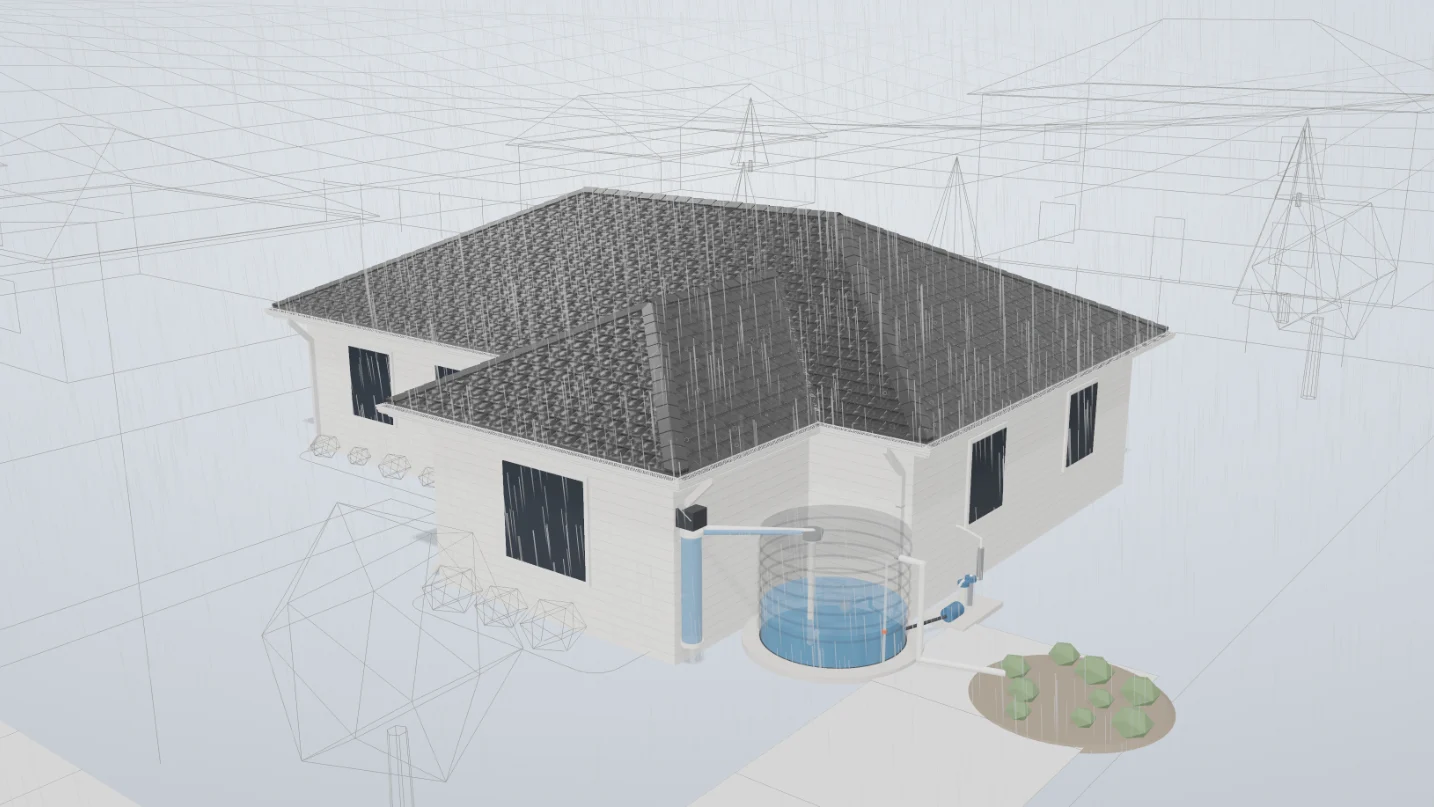
Rainwater Harvesting From Your Roof: The Complete Guide
Factory-coated metal is the most recommended roof for rainwater harvesting, and coated aluminum sheds the least zinc of any roof studied. No roof makes rain drinkable on its own: garden use needs screens and a first-flush diverter; drinking water needs filtration, disinfection and lab testing.
Read article →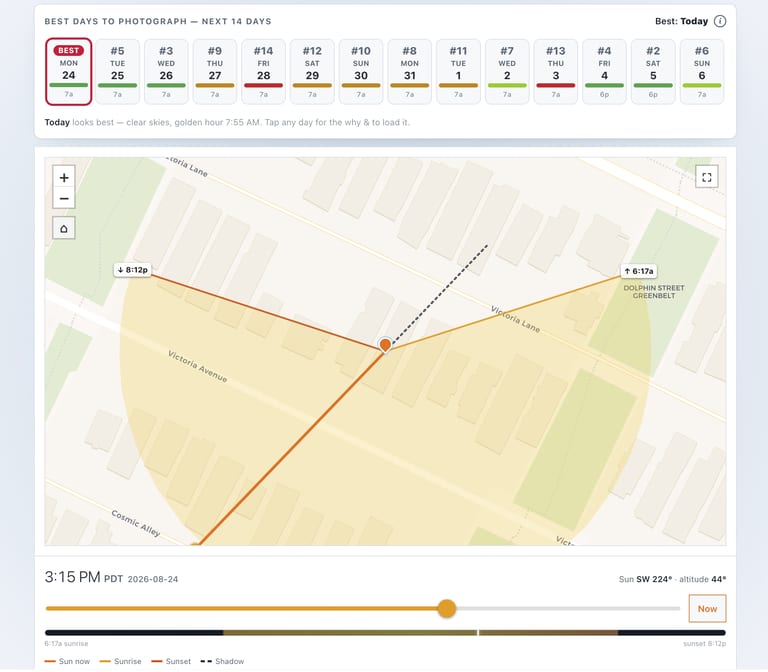
Free Sun & Golden-Hour Calculator: The Best Time to Photograph Any Property
Interlock's free Sun & Golden-Hour Calculator shows the best time — and the best day this week — to photograph any address. Enter a property, choose which way the front faces, and it maps sunrise, sunset, golden hour, sun direction, and a 14-day shoot forecast. No account, no cost.
Read article →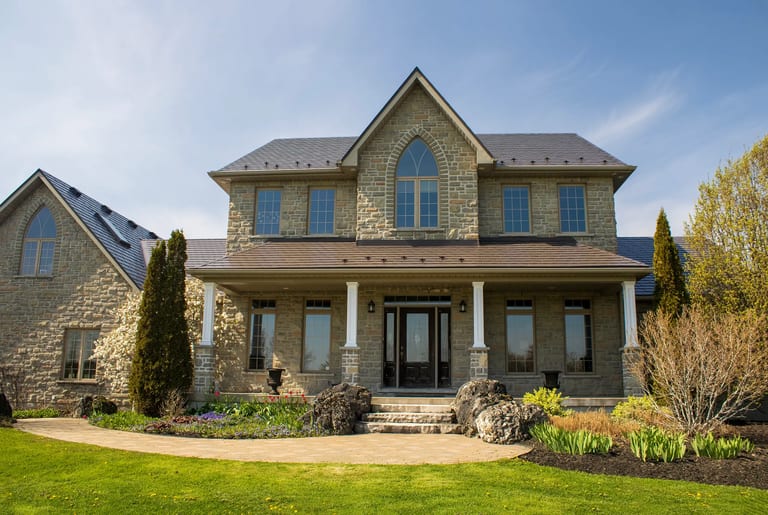
How Much Does an Aluminum Roof Cost Per Square Foot?
Installed, a premium aluminum roof typically costs about $12 to $20+ per square foot — roughly $1,200 to $2,000+ per roofing square (100 sq ft). Lighter shingle, slate, shake, and tile profiles on simple roofs sit at the low end; standing seam and complex or specialty roofs sit at the high end. Aluminum costs more than steel because it won't rust, resists salt-air corrosion, weighs less, and is nearly 100% recyclable. Every figure here is a planning estimate — request a free on-site quote for your exact number.
Read article →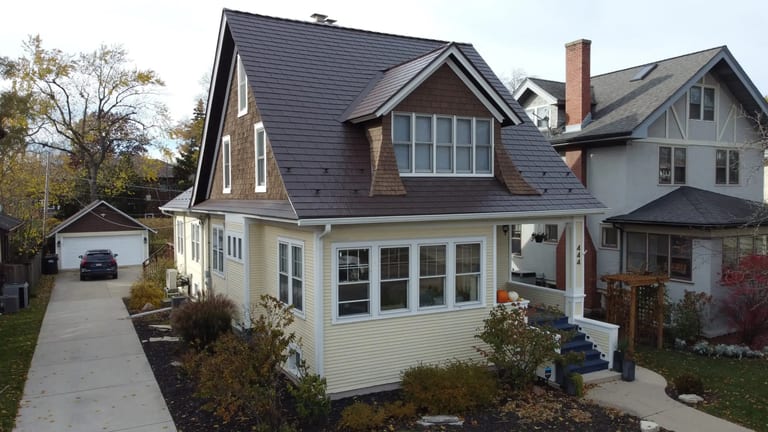
Metal Roofing vs. Asphalt Shingles: The Complete Comparison
Metal roofing and asphalt shingles differ most in lifespan, upfront cost, and long-term value. Asphalt is cheaper to install and simpler to repair, making it the sensible pick for tight budgets or short stays. A premium aluminum metal roof costs more upfront but lasts 50-75 years, resists 120 mph winds, hail, and fire, weighs a fraction of asphalt, and usually wins on total cost of ownership if you plan to stay in your home.
Read article →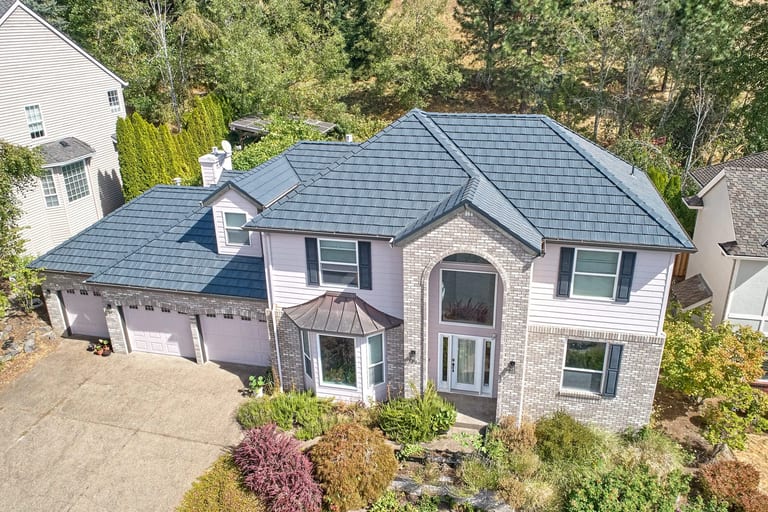
Aluminum vs. Steel Roofing: Which Is Better for Your Home?
Steel (Galvalume) is harder and cheaper up front, making it a strong value in dry, inland and hail-prone climates. Aluminum is lighter, never rusts, and dramatically outperforms steel in coastal or salt-air environments, often closing the price gap over a multi-decade lifespan. Interlock builds every system from aircraft-grade aluminum with a PVDF Alunar finish for lifetime corrosion immunity.
Read article →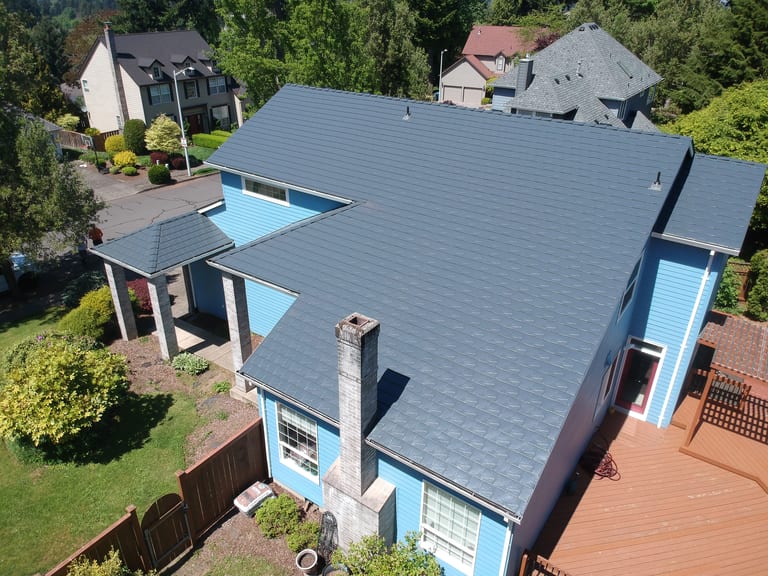
Are Metal Roofs Loud When It Rains? Debunking the Noise Myth
The belief that metal roofs are loud in the rain comes from remembering bare panels on barns and sheds, not from experiencing a real home. A residential metal roof installed over solid decking, underlayment, and an insulated attic is about as quiet inside as asphalt shingles.
Read article →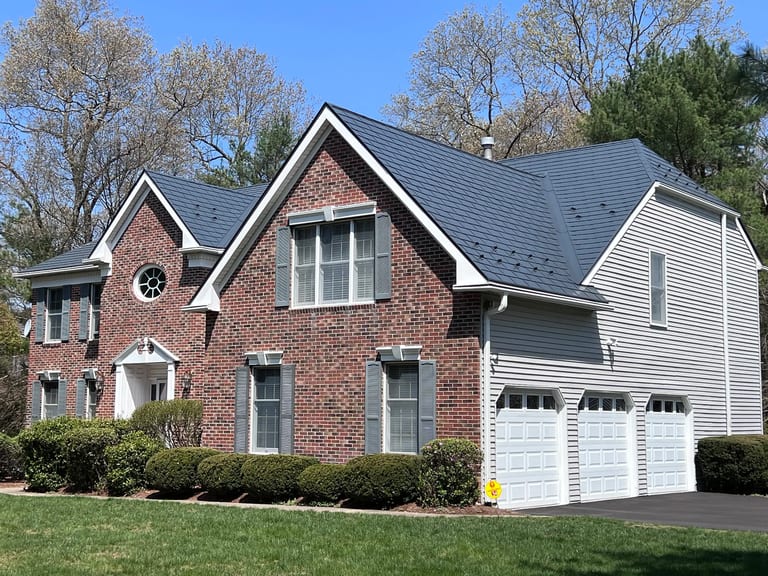
Will a Metal Roof Lower My Home Insurance Premium?
Often yes, but it varies. Many carriers offer a metal roof insurance discount for impact-resistant (UL 2218 Class 4) and Class A fire-rated roofing, especially in hail, wind, or wildfire regions. The amount is set by your insurer and is never guaranteed. You usually have to ask and provide manufacturer test documentation. This article is educational only, not financial or insurance advice.
Read article →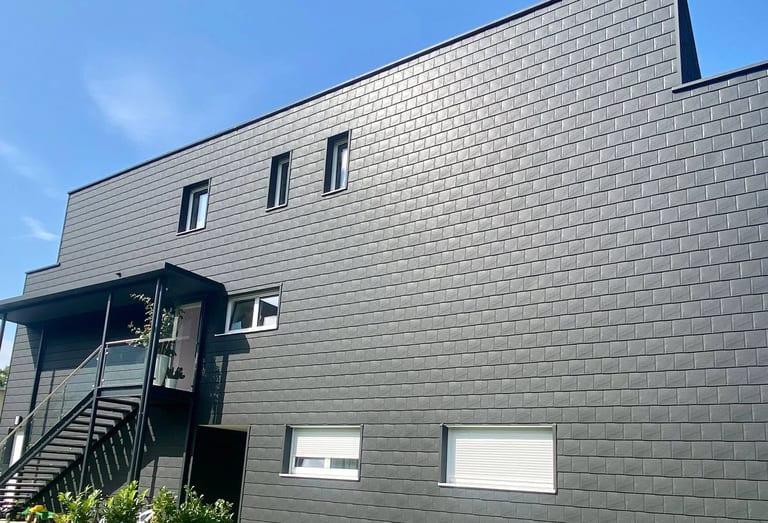
Interlock Adds Aluminum Metal Siding & Wall Cladding
Interlock now offers aluminum metal siding and wall cladding — the same lifetime panels, Alunar coating, and colors as its roofs, backed by a 50-year transferable warranty.
Read article →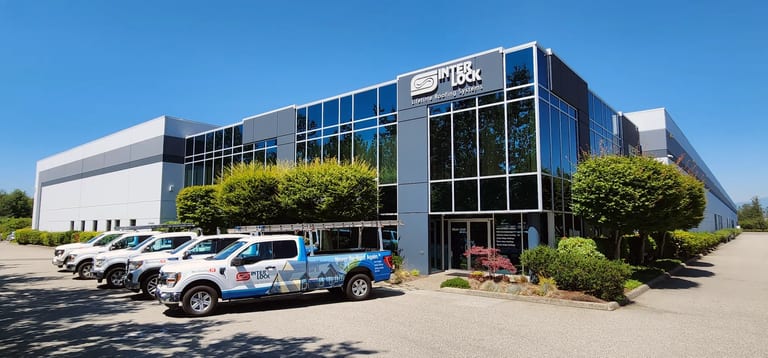
What Makes Interlock an Industry Leader in Premium Metal Roofing
"Industry leader" is a claim every roofer makes. Interlock backs it with specifics: corrosion-proof aircraft-grade aluminum, the Alunar® PVDF coating, a concealed four-way mechanical interlock warranted to 120 mph, an expected 50–75 year service life, and a transferable Lifetime Limited Warranty. The same system the U.S. National Science Foundation chose for Antarctica is what goes on your home.
Read article →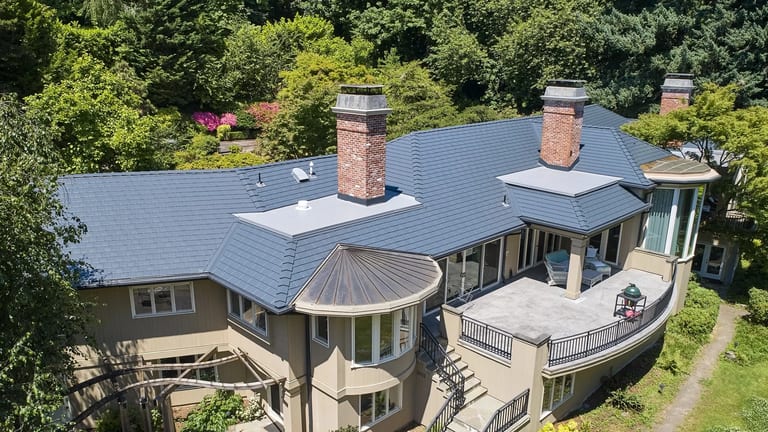
Explore Diverse Metal Roof Styles for Your Home
Metal roofing comes in three materials (aluminum, steel, copper) and many looks — slate, shake, shingle, tile, and standing seam. Aluminum lasts 30–70+ years and won’t rust, copper can last 100+, and Interlock pairs any of these styles with a four-way interlock, UL 2218 Class 4 impact rating, and a limited lifetime warranty.
Read article →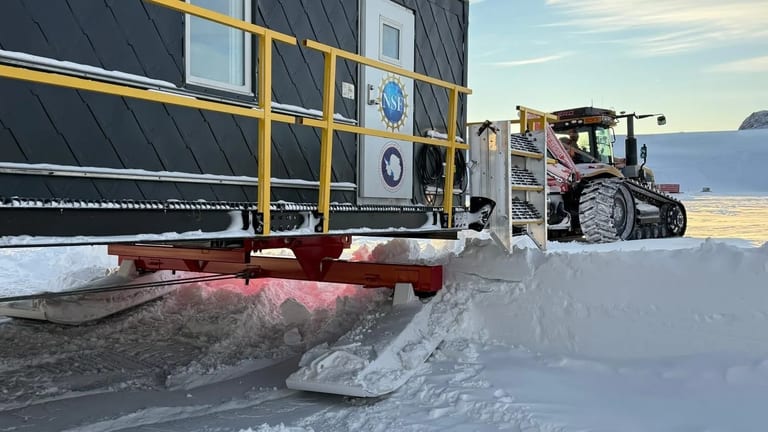
Extreme Roofing: Interlock Selected for Antarctic Science Base
When the U.S. National Science Foundation needed roofing for a research module bound for Antarctica, it chose Interlock. The aluminum system endures −60°F cold, 100+ mph katabatic winds, and extreme UV, then survived a 995-mile overland traverse to its site — the ultimate proof that a roof built for the South Pole will protect any home.
Read article →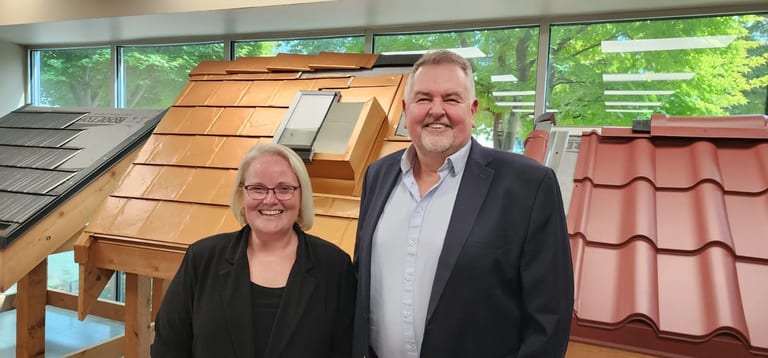
Hon. Jill McKnight, Canada's Veterans Affairs Minister, Visits Interlock Metal Roofing to Discuss Tariffs and Manufacturing
On July 3, 2025, The Honourable Jill McKnight, MP for Delta and Canada’s Minister of Veterans Affairs, toured Interlock Metal Roofing’s Delta, BC manufacturing facility to discuss Canadian aluminum manufacturing and the impact of metal tariffs on a homegrown industry.
Read article →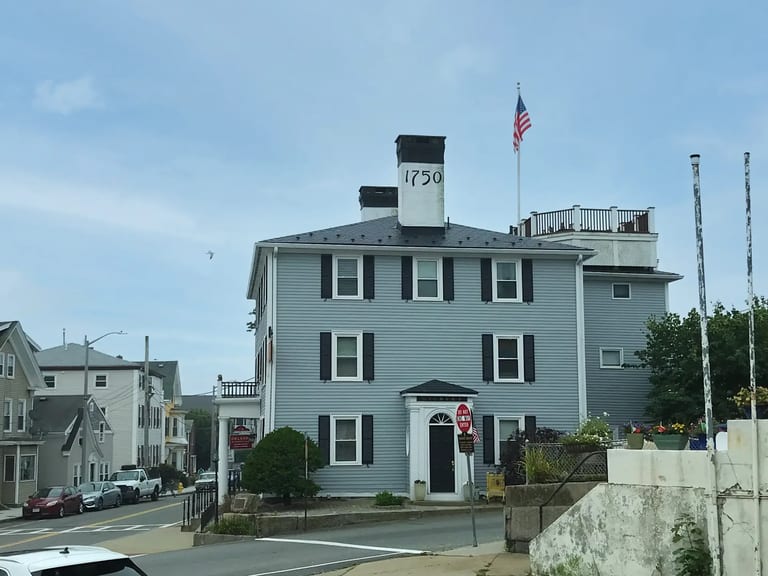
Historic Metal Slate Roofing in Gloucester, MA
The 1750 Samuel Gilbert House in Gloucester, MA — a 275-year-old colonial landmark — was preserved with a Black Interlock Metal Slate roof in 2012. It delivers the authentic look of natural slate without the crushing weight, won’t crack or split, withstands New England’s coastal weather, and carries a 50-year transferable warranty.
Read article →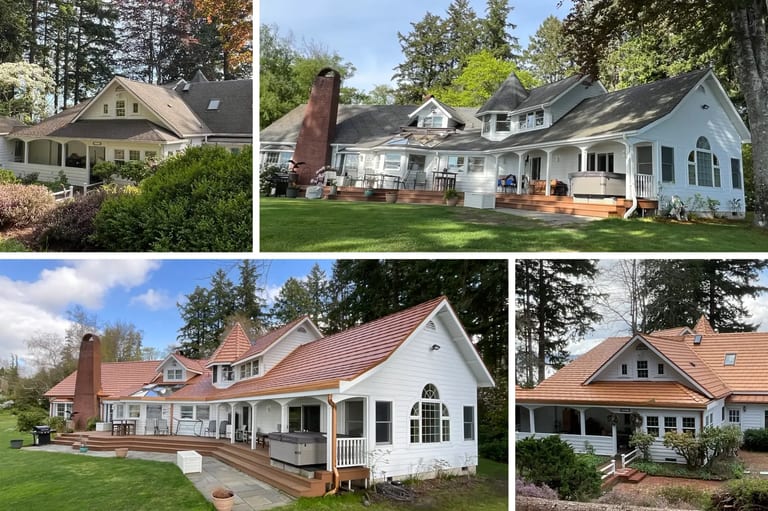
Why This Bremerton Home Chose a Roof That Doesn't Rust
A waterfront Bremerton, Washington home traded its rust- and rot-prone roof for a Copper Penny Interlock Aluminum Shake — the warm look of copper, with aluminum that can’t rust. Sealed in Alunar® coating and locked four ways against salt-laden Puget Sound wind, it’s engineered to be the home’s last roof.
Read article →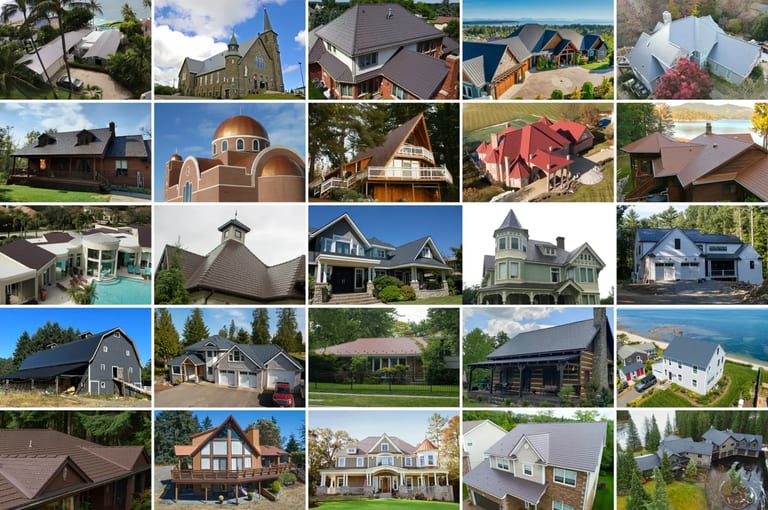
The Ultimate Guide to the Best Types of Metal Roofing for Your Home
Interlock makes six aluminum and copper roofing profiles — Slate, Cedar Shingle, Cedar Shake, Mediterranean Tile, Standing Seam, and Solid Copper. All share the same engineering: lightweight aluminum (0.41–0.59 psf), a four-way mechanical interlock, a PVDF Alunar® finish, UL 2218 Class 4 impact resistance, and a limited lifetime warranty.
Read article →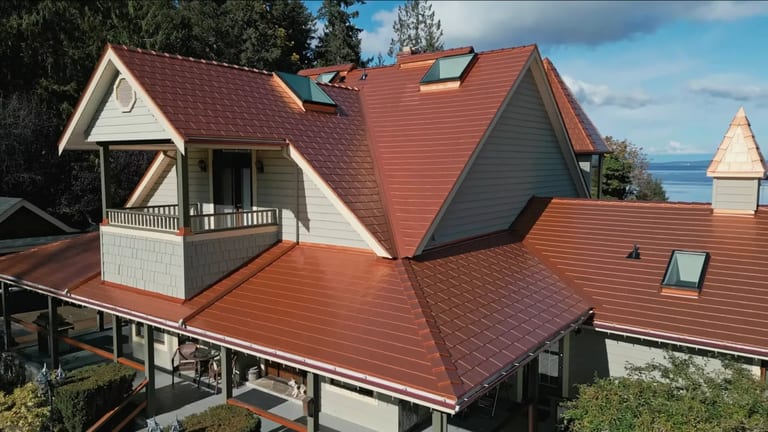
Why Aluminum Shingle Roofs Are Best for Coastal Homes
Salt air destroys ordinary roofs. Interlock’s aircraft-grade aluminum shingles can’t rust, are sealed in a marine-tough PVDF Alunar® coating, carry UL 2218 Class 4 impact resistance, and are Florida Building Code approved for High-Velocity Hurricane Zones — making them the best choice for coastal homes.
Read article →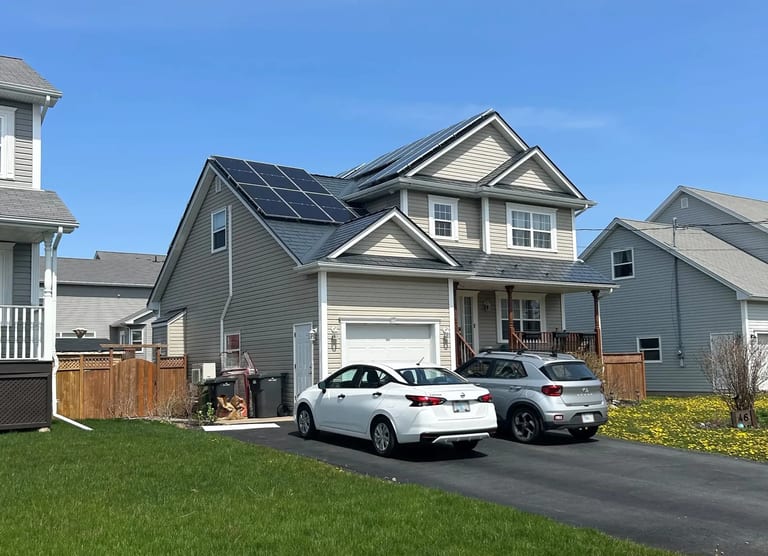
Investing in a Sustainable Future
A truly sustainable roof does two jobs: it lasts so long it’s rarely replaced, and it helps power the home. Interlock pairs a recyclable aluminum roof — installable over your old roof — with solar readiness, for decades of clean energy on a roof that outlives the panels.
Read article →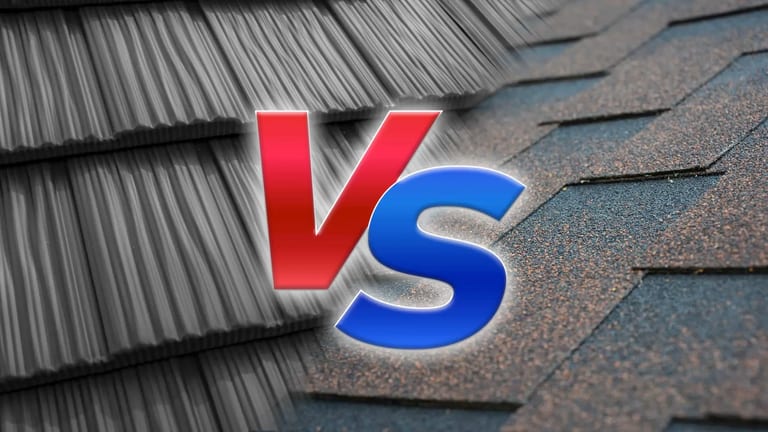
Is It Cheaper to Put a Metal Roof or Shingles?
Asphalt shingles are cheaper to install today; a metal roof is cheaper to own. Shingles run roughly $120–$400 per square and last 15–20 years, so you replace them 2–3 times over the 50+ years one Interlock aluminum roof lasts — before counting avoided repairs.
Read article →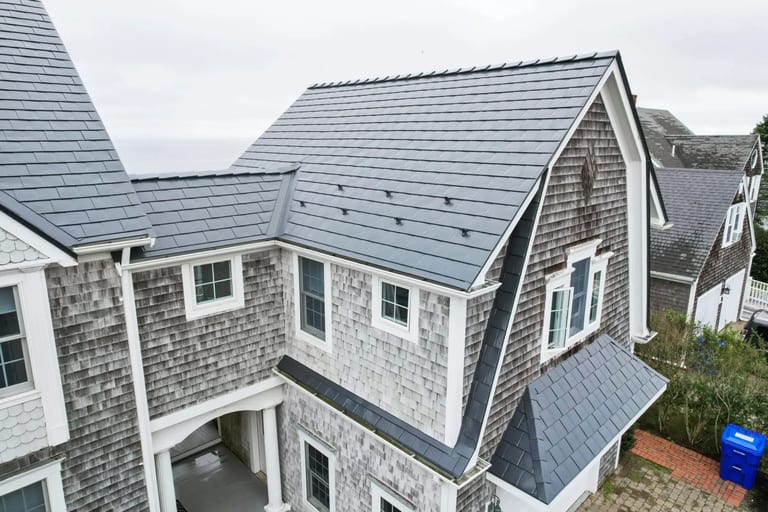
What Is Drip Edge & Why It Matters for Metal Roofs
A drip edge is a metal flashing installed along the edges of a roof that directs runoff away from the fascia and into the gutters, instead of letting it wick back and rot the wood. On a metal roof it also helps lock the panel edges down against wind uplift and seals out water at the seams.
Read article →
Understanding and Preventing Ice Dams: Expert Tips for Homeowners
Ice dams form when heat escaping into the attic melts roof snow, which refreezes at the cold eaves and traps water that backs up under the roof. The fixes are attic insulation and ventilation — and a smooth metal roof that sheds snow and ice before a dam can build.
Read article →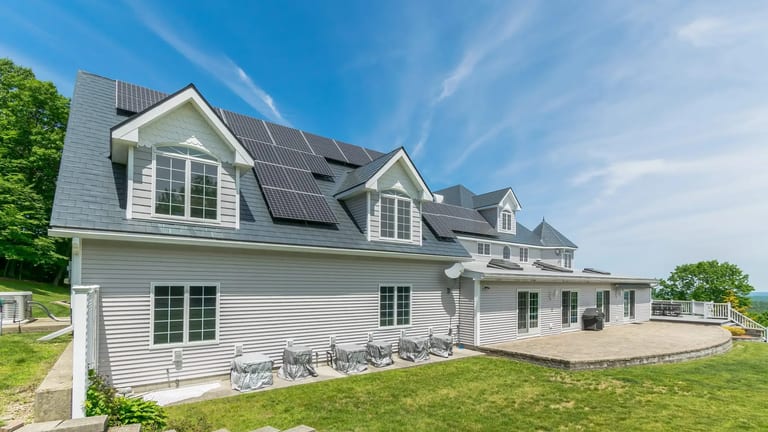
Installing Solar Panels on an Interlock Metal Roof
An Interlock metal roof is an ideal base for solar: it lasts 40–70+ years (far longer than a 25–30 year array), so you never remove panels to re-roof. Standing Seam lets panels clamp on with no roof penetrations, the install doesn’t void the warranty, and the reflective surface keeps panels cooler and more efficient.
Read article →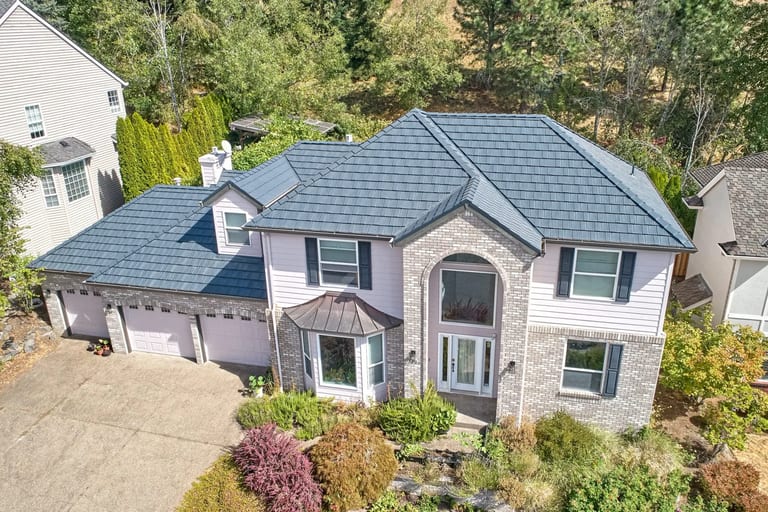
Can You Walk on a Metal Roof? Safety Tips
You can walk on a metal roof, but you usually shouldn’t. It’s slippery, you can dent panels or void coverage if you step wrong, and falls are the real danger. If walking is unavoidable, use fall protection and slip-resistant footwear and step in the right places — but for inspections and repairs, it’s safest to call a professional.
Read article →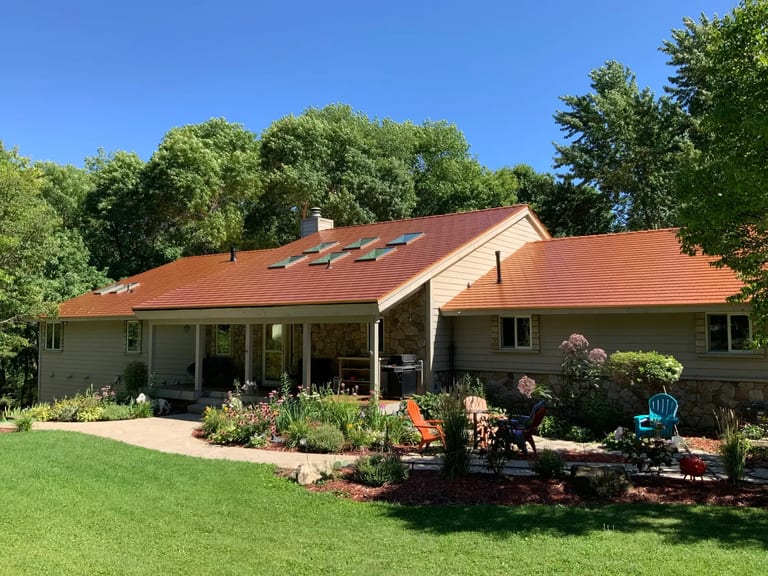
Maximizing Energy Efficiency: The Benefits of Metal Roofs
Interlock's reflective aluminum roofing bounces more of the sun's heat away than dark asphalt; actual savings depend on climate, color, insulation and ventilation. Paired with a limited lifetime warranty, Class A fire rating, and 120 mph wind resistance, it's an energy upgrade that protects your home for decades.
Read article →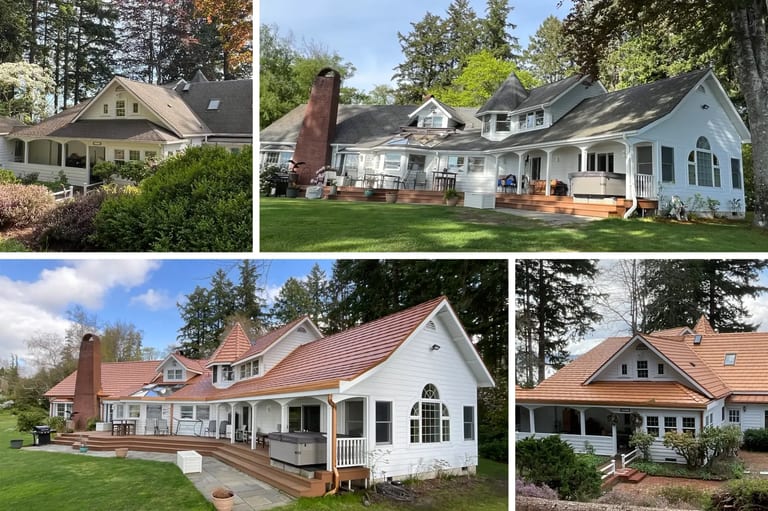
Why Proper Roof Installation Is Crucial for Your Home
An Interlock roof is an interlocking system of components — panels, flashings, valleys, backpans, collars, drip caps, underlayment, and specialty fasteners — not a stack of parts. It’s engineered to be installed correctly by trained, certified Interlock installers, which is why it isn’t a DIY product and why expert installation protects both performance and the limited lifetime warranty.
Read article →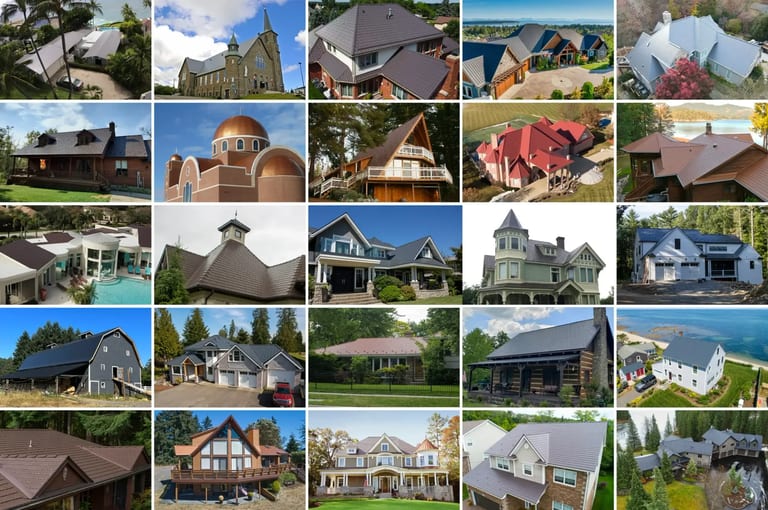
15 Most Popular Roof Types and Their Characteristics
Roof type refers to the shape of the roof — gable, hip, gambrel, mansard, flat, and a dozen more — and each has its own strengths in cost, weather resistance, attic space, and solar suitability. Whatever shape your home has, an Interlock metal roof can be formed to fit it.
Read article →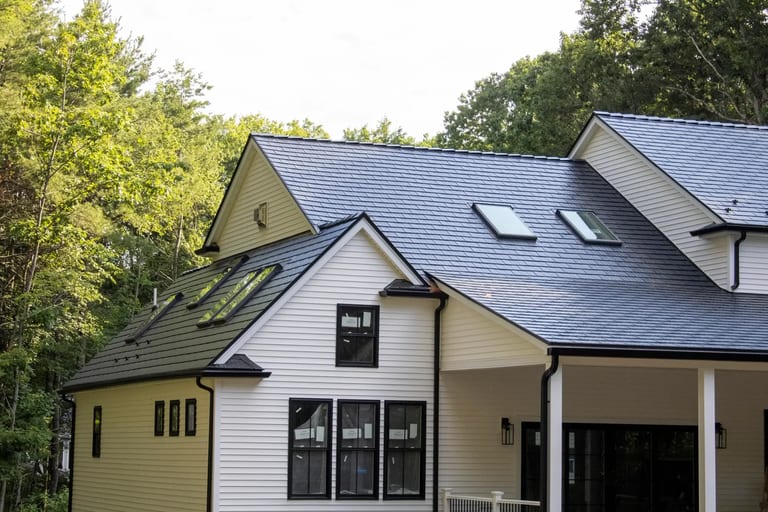
Skylights for Metal Roofs: Flashing, Mounting, and Maintenance
Yes — you can add skylights to a metal roof. Curb-mounted skylights are compatible with all Interlock Lifetime Metal Roofing Systems, integrating with the panels and flashing to stay watertight. They bring in natural light, can help with heating and ventilation, boost mood, and add value when installed properly.
Read article →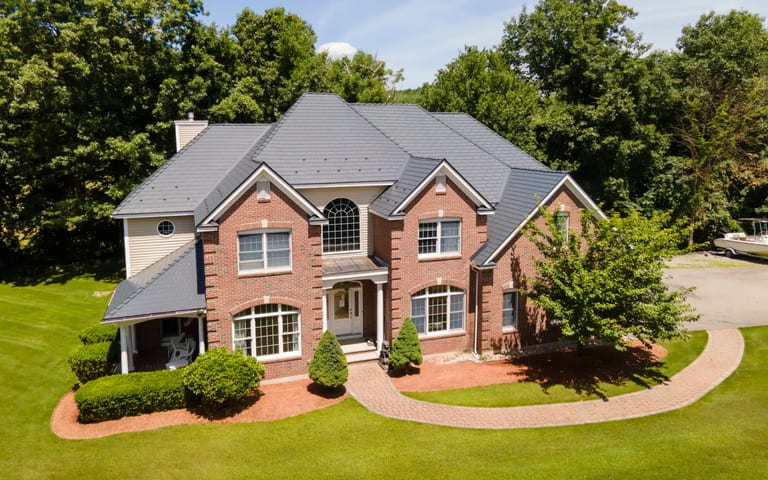
Minimum Roof Pitch for a Metal Roof
The minimum pitch for all Interlock Metal Roofing Systems is 3:12 — meaning the roof rises 3 inches for every 12 inches of horizontal run. Adequate slope lets water run off quickly and prevents pooling and leaks; for roofs shallower than 3:12, a membrane roofing system is recommended instead.
Read article →
Why an Interlock Metal Roof Is a Great Investment
A metal roof costs more upfront, but as an asset it pays back: one lifetime install instead of three asphalt re-roofs, possible insurance discounts from its Class A fire and Class 4 impact ratings, higher resale value, and a transferable limited lifetime warranty.
Read article →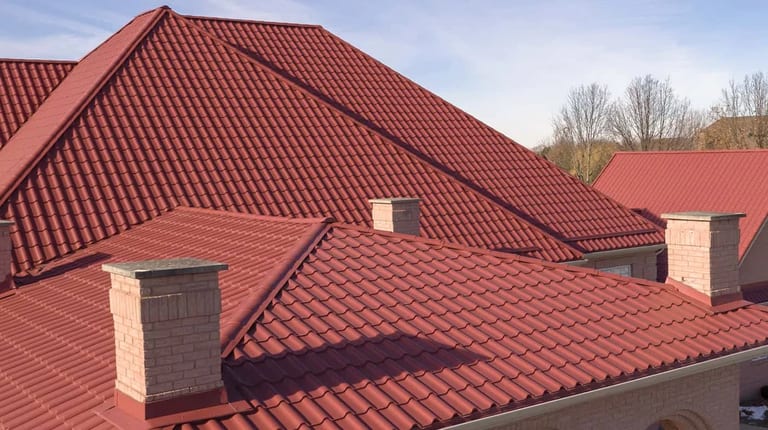
Interlock Metal Roofing Systems Are Strong
Interlock roofs are made from aircraft-grade aluminum — pound-for-pound stronger than steel, about one-third the weight, and rust-proof. Formed into a four-way interlocking panel and finished in Alunar® coating, the system is light enough to install over an existing roof yet rated UL 2218 Class 4 for impact.
Read article →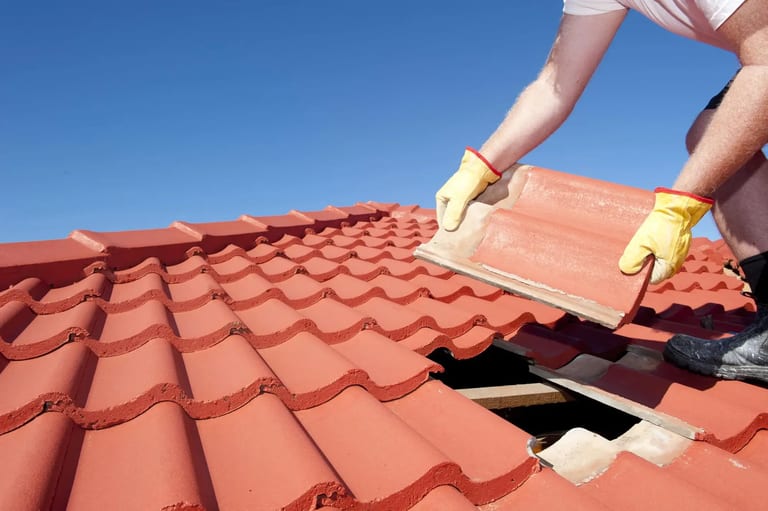
Clay or Concrete Tile Roof Problems
Clay and concrete tile roofs are beautiful and long-lasting, but they crack, slide, and chip, grow moss and stains, and sit on underlayment that fails decades before the tiles — a repair that means removing the entire roof. They’re also very heavy. An aluminum Mediterranean Tile gives the look at ~96% less weight.
Read article →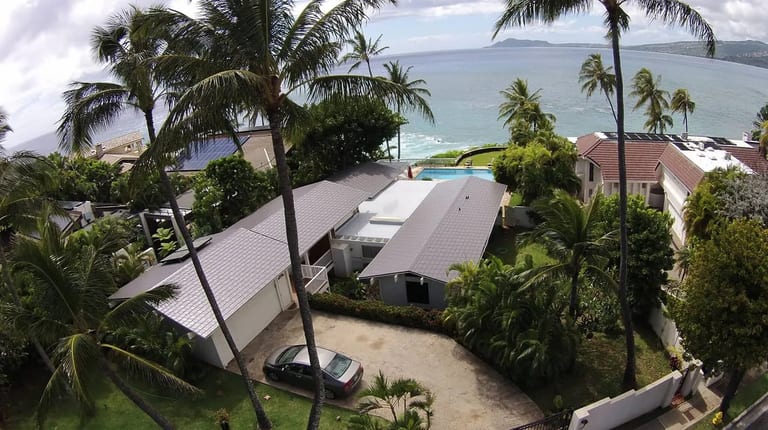
What? You Think Roofs Last Forever?
No roof lasts forever — weather wears every roof out eventually. But the gap is enormous: asphalt shingles last 15–20 years (often less), while an Interlock aluminum roof is built to last 50+. Choosing the right replacement material decides whether you re-roof once or three times.
Read article →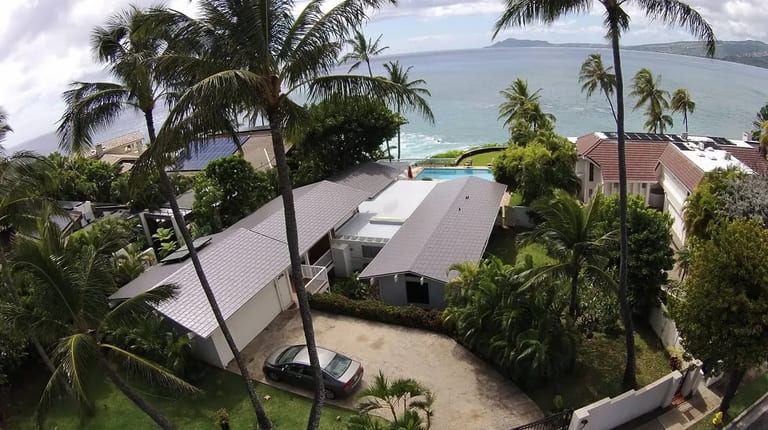
Common Asphalt Shingle Problems & What to Do
Asphalt shingles curl, crack, and blow off; lose the protective granules that shield them from UV; and grow moss, algae, and black streaks. Each problem shortens an already short (15–20 year) lifespan. A rust-proof aluminum roof eliminates all of them — no granules to lose, nothing to rot, and a 50+ year life.
Read article →
What Is Cool Roofing? CRRC Ratings & Benefits
A “cool roof” reflects the sun’s heat instead of absorbing it, which can lower cooling bills and indoor temperatures. Interlock’s Alunar® colors are CRRC-rated, with initial solar reflectance of 0.25–0.44 and thermal emittance of 0.83 to 0.86 — in a range of colors, not just white.
Read article →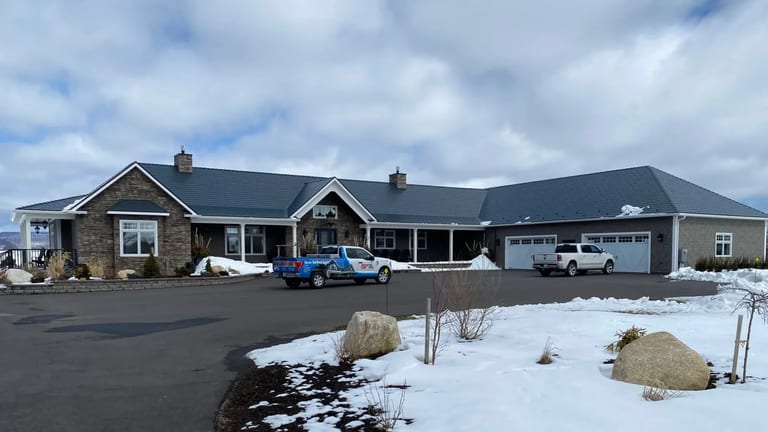
The Effects of Snow on Your Roof
Snow damages roofs by weight, not depth — and a foot of wet snow can outweigh several feet of powder. An Interlock aluminum roof adds almost no load of its own (~0.41 psf) and its smooth, four-way-interlocked surface sheds snow; one owner reported a 95% drop in roof snow load after switching.
Read article →
Roofing Wind Damage: 120 MPH Rated Metal Roofs
Interlock metal roofs are tested and warranted to resist 120 mph winds — Category 2 hurricane strength — and are Florida Building Code approved for High-Velocity Hurricane Zones. The secret is a four-way mechanical interlock with no exposed fasteners for wind to catch and peel.
Read article →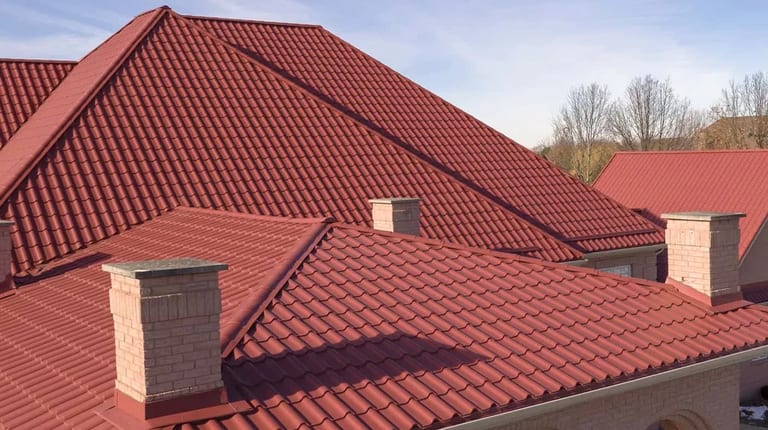
Quality Roof Materials: Why Components Matter
A roof is only as good as its weakest component. Interlock builds the whole system to last — aircraft-grade aluminum panels, stainless-steel fasteners, and cast-metal snow guards — so nothing rusts out before the roof does. It’s the quality a retired engineer noticed, and the reason the Empire State Building switched its windows to aluminum.
Read article →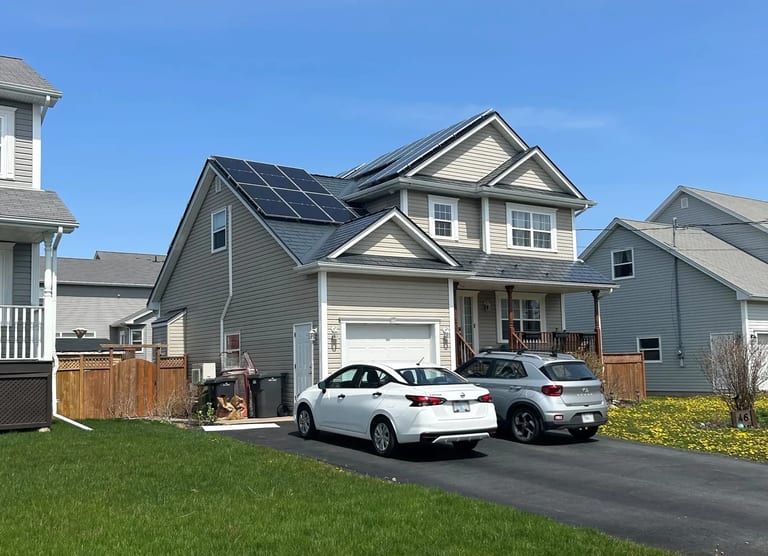
Earth Day and Your Roof: The Real Sustainability Case for Metal
Earth Day began in 1970, sparked by a 1969 oil spill off Santa Barbara, and is now the world’s largest secular observance, marked by more than a billion people. Beyond the history, going green can save real money — and a recyclable, energy-efficient metal roof is one of the most durable green choices a homeowner can make.
Read article →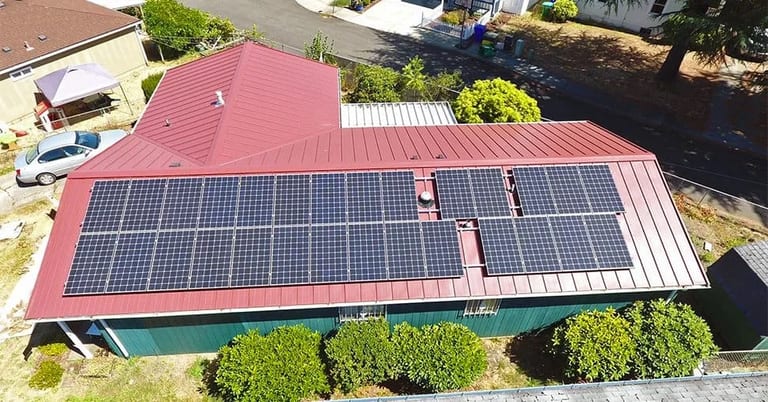
What Does 'Solar Friendly' Mean?
“Solar friendly” means a roof is built to work with solar panels — and to outlast them. Interlock qualifies on every count: recyclable aluminum, a 40–70+ year lifespan that beats a 25–30 year array, profiles engineered for panel mounting, and the ability to install over your existing roof.
Read article →