

Roofing Wind Damage: 120 MPH Rated Metal Roofs
Quick Answer
Wind destroys roofs by catching an edge and peeling it back, which is why asphalt shingles tear off in storms. Interlock panels lock together on all four sides with concealed fasteners, leaving no edge for wind to grab. The system is tested and warranted to 120 mph (Category 2 hurricane strength) and Florida Building Code approved for High-Velocity Hurricane Zones — the toughest wind standard in the U.S.
Interlock metal roofs are tested and warranted to resist 120 mph winds — Category 2 hurricane strength — and are Florida Building Code approved for High-Velocity Hurricane Zones. The secret is a four-way mechanical interlock with no exposed fasteners for wind to catch and peel.
Most roofs don't fail in a storm because the material is weak — they fail because the wind finds an edge and peels them apart.
That's the whole story of wind damage. An asphalt shingle is a flap held down by a strip of adhesive and a few exposed nails; once a gust lifts one tab, the wind gets underneath and unzips the roof. The fix isn't a thicker shingle — it's a roof with no edge to lift, which is exactly how Interlock is engineered.
Interlock panels lock into one another on all four sides with hidden fasteners, then the whole field is mechanically tied to the deck. The result is a roof rated and warranted to 120 mph and approved for the most demanding hurricane codes in the country — across every profile.
## Rated and Warranted to 120 MPH Interlock roofing systems are tested and warranted to resist sustained wind speeds of up to 120 mph (193 km/h) — fast enough to ride out a Category 2 hurricane. The system carries Florida Building Code product approval (FL7263) that includes the state's High-Velocity Hurricane Zones, the most stringent wind-uplift standard in the United States.
## The Four-Way Interlocking Design Wind resistance is a design problem, not just a material one. Each Interlock panel mechanically locks to its neighbors on all four sides, and the fasteners are concealed beneath the interlocks rather than exposed on the surface. With no lip, tab, or screw head sticking up, the wind has nothing to catch — it simply slides across the roof. That same interlocking geometry is what makes Interlock Metal Roofing Systems Are Strong against far more than wind alone.
## Why Metal Beats Shingles in Wind Asphalt shingles are rated by how well their adhesive resists peeling, and that adhesive degrades with age and UV. Interlock's strength comes from interlocked geometry that doesn't depend on glue. The panels are also aircraft-grade aluminum — light but rigid — so they don't flap or fatigue in repeated gusts.
## Proven in Real Storms In a January 2000 windstorm with 120 mph gusts, a 1997-installed Interlock roof came through with zero damage — while a neighbor's conventional shingle roof was destroyed.
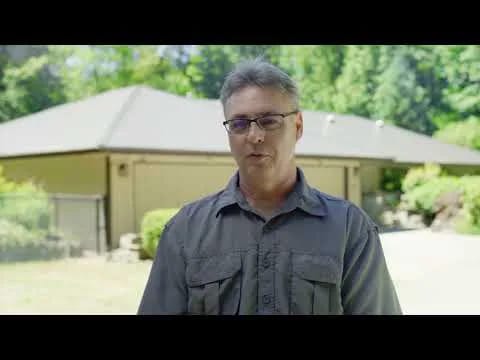
More recent, independently verified storm experience backs up that track record. A Brantford, Ontario customer whose Interlock aluminum shingle roof was struck by a tree limb during a wind storm reported: "...when a wind storm sent a tree limb through the roof, their team again impressed us with prompt, professional storm and wind damage roof repair, working seamlessly with other contractors and our insurance company while maintaining outstanding responsiveness, punctuality, quality, and overall professionalism."
"...when a wind storm sent a tree limb through the roof, their team again impressed us with prompt, professional storm and wind damage roof repair, working seamlessly with other contractors and our insurance company while maintaining outstanding responsiveness, punctuality, quality, and overall professionalism." — Brad Sing, Brantford, Ontario · Installed April 2022 · Verified customer review
## Wind, Rain, and Everything That Comes With It The same four-way interlock that resists uplift also blocks wind-driven rain from being forced under the panels from any direction, and the panels carry UL 2218 Class 4 impact resistance — the highest rating — against the debris and hail a storm throws. In coastal regions, that same weatherproofing is why an aluminum shingle roof suits homes near the ocean so well, and it's the same system that stands up to heavy snow load in winter climates.
## Peace of Mind, Backed for Life Interlock backs its wind performance with the Guardian Lifetime Limited Warranty — nonprorated for the original owner and transferable to the next — so the protection travels with the home. Request a free quote and put a roof on your house that's engineered to stay there.
Frequently Asked Questions
What wind speed can an Interlock metal roof withstand?
Interlock roofs are tested and warranted to resist winds up to 120 mph (193 km/h) — Category 2 hurricane strength — and are Florida Building Code approved for High-Velocity Hurricane Zones.
Why do metal roofs resist wind better than shingles?
Interlock panels interlock on all four sides with concealed fasteners, so there's no exposed edge for wind to catch and peel. Asphalt relies on aging adhesive strips and exposed nails that fail over time.
Are there real-world examples?
Yes. In a January 2000 windstorm with 120 mph gusts, a 1997-installed Interlock roof had zero damage while a neighbor's shingle roof was destroyed.
Is the roof approved for hurricane zones?
Yes. Interlock carries Florida Building Code product approval (FL7263) that includes High-Velocity Hurricane Zones — the most demanding wind-uplift standard in the U.S.
Does wind-driven rain get under the panels?
No. The four-way interlock seals the panels to each other from every direction, so wind-driven rain can't be forced underneath the way it can with lapped shingles.
Is the wind performance warrantied?
Yes. It's backed by the Guardian Lifetime Limited Warranty, which is nonprorated for the original owner and transferable to a second owner.
Explore Interlock Metal Roofing
Last updated June 9, 2026