

Skylights for Metal Roofs: Flashing, Mounting, and Maintenance
Quick Answer
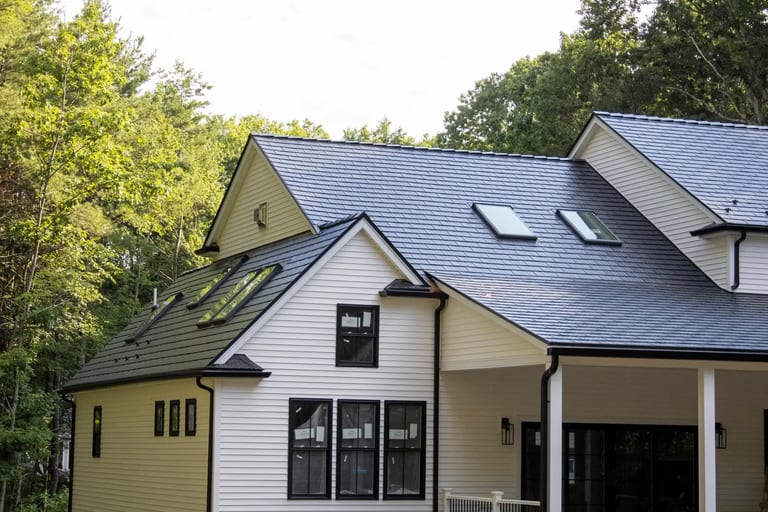
Curb-mounted skylights are compatible with all Interlock Lifetime Metal Roofing Systems. A curb — a raised, watertight frame — is built into the roof, and the metal panels and flashing are fitted around it so the skylight integrates seamlessly without compromising the roof’s watertightness. Beyond the light itself, skylights can help heat a room in winter, vent hot air in summer, improve mood, and add value — provided they’re professionally installed.
Yes — you can add skylights to a metal roof, and the mounting method you choose matters as much as the skylight itself. Curb-mounted skylights are the standard, most watertight approach on Interlock metal roofing; deck-mounted units sit lower but demand more precise flashing. Either way, watertightness comes down to how the panels, curb, and flashing integrate — not the skylight unit on its own.
A skylight can transform a dark room into the brightest one in the house — and yes, you can absolutely have one on a metal roof, as long as it's done the right way.
Skylights are one of the most popular ways to bring natural light deep into a home, but homeowners often assume a metal roof rules them out. It doesn't. What actually matters is the mounting method, the flashing details specific to a metal panel profile, and ongoing maintenance — not whether metal and skylights are compatible in general.
## Curb-Mounted vs. Deck-Mounted Skylights on Metal The two common mounting approaches behave differently on a metal roof. A curb-mounted skylight sits on a raised, watertight frame (the "curb") built up from the roof deck. That raised curb gives installers a clean vertical surface to terminate the metal panels and flashing against, well above the plane where water runs — which is why it's the standard, most reliably watertight approach on a metal panel roof. A deck-mounted skylight, sometimes called low-profile, sits nearly flush with the roof surface for a sleeker look, but without a curb's height advantage, the panel-to-frame flashing has to be precise, and the detail performs best on steeper-pitched roofs where water sheds quickly rather than lingering near the opening.
## Where Skylights Actually Leak — and Why Flashing Is Everything A skylight almost never leaks through its glazing. It leaks where the metal panels terminate against the curb or frame, and where the flashing pieces around that termination overlap — the same principle that makes flashing and valleys the most leak-prone details anywhere on a roof, skylight or not. On a metal roof specifically, the panel profile, seam height, and pitch all affect how that flashing has to be formed and layered, which is why proper roof installation matters just as much for a skylight detail as for the rest of the roof, and why the minimum roof pitch for a metal roof is worth checking before finalizing a skylight's placement and mount style.
## Maintenance and Inspection A skylight is a permanent roof penetration, so it deserves the same periodic attention as the rest of the roof rather than being ignored once installed. Check that the flashing and seals around the curb remain intact and haven't been disturbed by ice, wind, or foot traffic; confirm that fasteners near the opening haven't loosened or backed out over time; and clear leaves, needles, or other debris that collect against the curb, since trapped debris holds moisture against the flashing longer than an open, sloped surface would. These checks pair naturally with a general roof inspection rather than requiring a separate visit.
## Skylights, Energy, and the Rest of the Roof Done thoughtfully, skylights support a home's broader energy performance rather than working against it: daylight reduces the need for electric lighting, a south-facing unit can add passive winter warmth, north-facing placements give softer light with less heat gain, and an operable unit vents summer heat directly. That complements what the rest of an Interlock roof is already doing — the reflective Alunar® coating system keeps the field of the roof cooler, while a well-placed skylight manages light and heat at a single, deliberate point.
## Why Professional Installation Is Essential Because watertightness lives entirely in the curb, the panel terminations, and the flashing, a skylight should be installed by a crew that understands both the skylight manufacturer's requirements and the specific metal panel profile it's being integrated with. That's also what protects your coverage: a properly flashed, professionally installed skylight does not compromise the Guardian Lifetime Limited Warranty on the rest of the roof, while an improperly integrated one is one of the few ways a warranty claim can get complicated.
## Bring In the Light A metal roof and a bright, daylit home aren't at odds. Choose curb-mounted for the most proven watertight performance or deck-mounted for a lower profile on a steep pitch, insist on installers experienced with metal-roof flashing, and keep the skylight on your maintenance checklist going forward. Request a free quote and ask about integrating skylights from the start.
Frequently Asked Questions
Can you install skylights on an Interlock metal roof?
Yes. Curb-mounted skylights are compatible with all Interlock Lifetime Metal Roofing Systems. The skylight mounts on a watertight curb, and the metal panels and flashing integrate around it to keep the roof dry.
What's the difference between curb-mounted and deck-mounted skylights on a metal roof?
A curb-mounted skylight sits on a raised, framed curb built up from the roof deck, which gives installers a clean vertical surface to flash the metal panels against — it's the standard approach on metal roofing. A deck-mounted (low-profile) skylight sits nearly flush with the roof surface, which looks sleeker but demands more precise panel-to-frame flashing since there's no curb height to work with; it's typically better suited to steeper-pitched metal roofs.
Where do skylights actually leak on a metal roof?
Almost never through the glazing itself. Leaks happen where the metal panels terminate against the curb or frame and where flashing pieces overlap — exactly the same principle that makes flashing and valleys the most leak-prone details anywhere on a roof. That's why skylight installation on a metal roof should be handled by installers experienced with that specific integration.
How should I maintain a skylight on a metal roof?
Inspect it as part of your regular roof upkeep: check that flashing and seals around the curb remain intact, confirm fasteners near the opening haven't backed out, and clear any leaves or debris that collect against the curb and could trap moisture. These checks pair naturally with a broader roof inspection.
Will adding a skylight void my roof warranty?
Not when installed properly. Like other roof penetrations, a correctly flashed and integrated skylight does not compromise the Guardian Lifetime Limited Warranty covering the rest of an Interlock roof — the key is professional installation that matches the panel profile and roof pitch.
Do skylights help with energy efficiency?
They can. Daylight reduces the need for electric lighting, a south-facing unit can add passive winter warmth, and an operable skylight vents summer heat — complementing the energy performance of Interlock's reflective Alunar® coating system on the rest of the roof.
Explore Interlock Metal Roofing
Last updated June 9, 2026